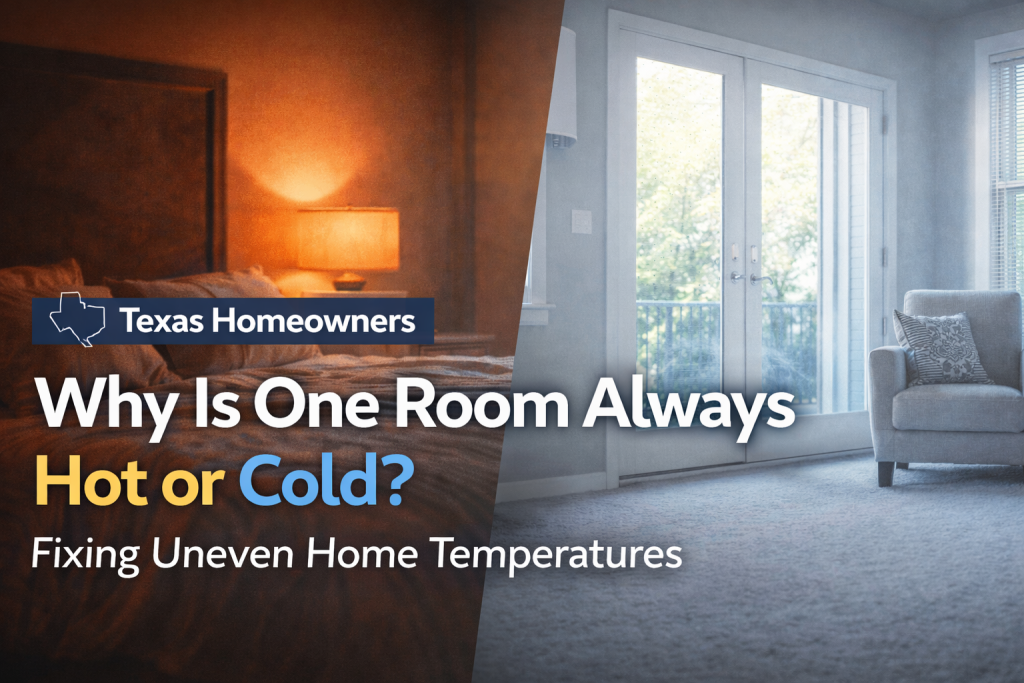
Few things are more frustrating than having one room that’s always uncomfortable. Maybe the bedroom stays cold while the living room feels fine, or an upstairs room is consistently warmer than the rest of the house.
This is one of the most common HVAC complaints among homeowners, especially in Texas where systems work hard year-round. The good news is that uneven temperatures usually have a cause—and in many cases, it can be corrected.
Why Uneven Temperatures Are So Common
Most homes were not designed with perfectly balanced airflow in mind. Over time, changes to the home, aging HVAC equipment, and normal wear can create noticeable comfort differences between rooms.
When air doesn’t move evenly through the house, some spaces receive too much conditioned air while others receive too little.
Airflow and Ductwork Issues
Ductwork plays a major role in how air is distributed. If ducts are poorly designed, undersized, leaking, or partially blocked, airflow becomes uneven.
Long duct runs, sharp bends, or disconnected sections can prevent certain rooms from receiving enough air, making them harder to heat or cool.
Room Location and Sun Exposure
Rooms that face direct sunlight or sit above garages often experience greater temperature swings. Upstairs rooms naturally retain more heat, while shaded or lower-level rooms may stay cooler.
These factors can amplify airflow issues already present in the HVAC system.
Insulation and Air Leaks
Insulation levels and air sealing vary throughout most homes. Gaps around windows, doors, attics, and walls allow conditioned air to escape and outdoor air to enter.
Even a well-functioning HVAC system will struggle to maintain comfort in rooms with poor insulation or air leaks.
HVAC System Design and Sizing
Sometimes the issue traces back to how the HVAC system was designed. Systems sized based solely on square footage may not account for layout, ceiling height, or zoning needs.
An improperly sized system can cool or heat some areas quickly while leaving others uncomfortable.
Why Closing Vents Often Makes Things Worse
Homeowners sometimes try to fix hot or cold rooms by closing vents in other areas. While this seems logical, it can actually disrupt system balance and increase pressure in the ductwork.
This may lead to reduced efficiency, added wear, and even more uneven temperatures.
What Actually Helps Fix Hot and Cold Rooms
Effective solutions depend on identifying the root cause. Common fixes may include:
– Adjusting airflow and balancing ducts
– Sealing or repairing ductwork
– Improving insulation or air sealing
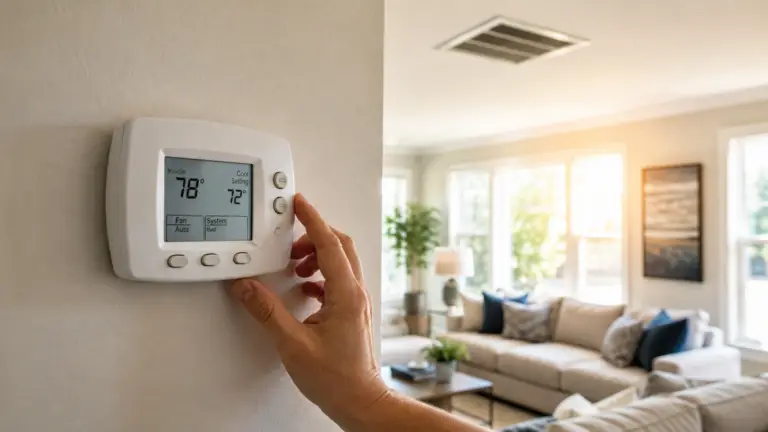
– Evaluating thermostat placement
– Assessing whether zoning or system adjustments are appropriate
A one-size-fits-all approach rarely works for uneven comfort issues.
When to Call a Professional
If certain rooms remain uncomfortable despite basic adjustments, a professional evaluation can help pinpoint the cause. An HVAC technician can assess airflow, duct design, insulation, and system performance to recommend targeted solutions.
How Delta Air Conditioning Helps Restore Comfort
Delta Air Conditioning helps homeowners diagnose and resolve hot and cold room issues by looking at the entire HVAC system—not just the equipment. By identifying airflow imbalances and system limitations, our team helps create more consistent comfort throughout the home.
If some rooms in your home never feel quite right, professional guidance can help uncover what’s really going on.
If you have concerns about the air circulating through your home, a professional evaluation can help determine the best next step. Contact Delta Air Conditioning