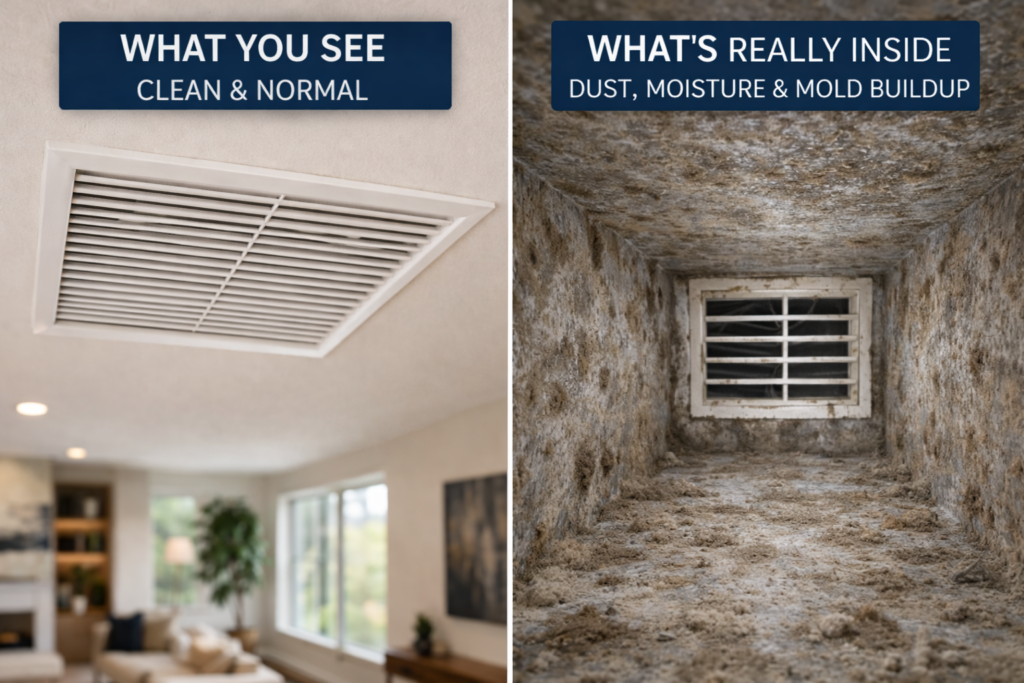
You know that feeling when you walk inside after mowing the lawn in August, and your house somehow feels almost as sticky as outside? You crank the thermostat down to 70, grab a glass of water, and assume the problem is solved. It’s not.
What most Dallas homeowners don’t realize is that indoor humidity is doing slow, silent, expensive damage to their home every single day during the warmer months. We’re not talking about comfort. We’re talking about things you own — things you paid good money for — quietly deteriorating behind the scenes.
Dallas indoor humidity damage doesn’t announce itself. There’s no alarm. No warning light. Just a slow bleed on your wallet that you won’t notice until something breaks, warps, cracks, or starts to smell.
Here are seven things the moisture in your air is ruining right now.
1. Your Hardwood Floors Are Swelling (and You Can’t See It Yet)
This is the one everyone thinks only happens to “fancy” homes. It doesn’t. If you have any hardwood, engineered wood, or even laminate flooring, Dallas humidity is working on it.
Wood absorbs moisture from the air. When indoor humidity stays above 55% — which happens constantly in DFW homes from May through September — the planks start to expand. First, the gaps between boards disappear. Then you get “cupping,” where the edges of each board start to rise higher than the center.
By the time you actually see the problem, the subfloor underneath may already be compromised. And that repair isn’t a weekend project. That’s a five-figure conversation.
2. Your Leather Furniture Is Growing Mold You Haven’t Found Yet
Got a leather couch? Leather chairs in the study? Here’s something nobody tells you when you buy them: leather is a sponge for moisture.
When your indoor humidity sits in the 60%+ range, the surface of your leather goods becomes a perfect habitat for mold and mildew. It usually starts on the back of the furniture — the part facing the wall, where air doesn’t circulate. By the time you see it on the seat cushions or smell that musty funk, it’s already deep in the pores of the leather.
Professional cleaning might save it. Might. But if Dallas indoor humidity damage has been working on that piece for an entire summer, you may be shopping for a replacement.
3. Your Electronics Are Corroding From the Inside Out
This one surprises people. Humidity doesn’t just affect wood and fabric — it goes after anything with a circuit board.
When moisture levels in your home stay elevated, condensation can form on the internal components of your TV, gaming consoles, sound systems, laptops, even your router. That condensation leads to oxidation on solder joints and connectors. Over time, you’ll start to notice devices that run slower, overheat, glitch, or just die for no apparent reason.
If you’ve ever had a TV or computer fail well before its expected lifespan, there’s a real chance your indoor humidity was a contributing factor. Keeping your home between 40% and 50% relative humidity is the sweet spot for both your comfort and your electronics.
4. Your Kitchen Cabinets Are Warping and the Doors Don’t Close Right
Open a kitchen cabinet. Close it. Did it stick? Did it not quite line up with the one next to it?
That’s not the house settling. That’s Dallas indoor humidity damage in action.
Cabinets — especially in kitchens and bathrooms where steam and moisture are already elevated — take a beating when your HVAC system can’t keep up with the moisture load. The wood swells, the hinges get stressed, and the doors start to hang crooked. Most homeowners just assume the cabinets are getting old. In reality, the air is aging them faster than it should.
5. Your Clothes Closet Smells Off (and It’s Not the Shoes)
Walk into your closet. Take a deep breath. If there’s even a hint of mustiness, you’ve got a humidity problem.
That smell is mildew, and it’s already on your clothes. Your suits, your dresses, your leather belts, your bags — all of it is sitting in a dark, enclosed space with limited airflow and elevated moisture. That’s a mold incubator.
Dallas homeowners with walk-in closets in interior rooms (no windows, no dedicated vents) are especially at risk. If your closet doesn’t get direct airflow from your HVAC system, it’s the most humid room in your house — and everything in it is paying the price.
6. Your Drywall Is Absorbing Moisture and Feeding Mold Behind the Walls
This is the one that keeps contractors busy every fall.
Drywall is porous. When indoor humidity stays elevated for months at a time — which is exactly what happens in a typical DFW summer — the walls themselves absorb moisture. On the surface, you might see paint bubbling or discoloration near the baseboards. Behind the surface, mold colonies are potentially establishing themselves.
The worst part? You can’t see it. You can’t smell it until it’s significant. And by the time you discover it during a renovation or a home inspection, remediation can run thousands of dollars. All because the air in the house was carrying too much water.
7. Your Medications and Supplements Are Losing Potency
This is the one nobody talks about.
Most medications and supplements are designed to be stored below 60% relative humidity. The bottles even say it — “store in a cool, dry place.” But if your Dallas home is sitting at 60% to 65% humidity indoors all summer, your medicine cabinet doesn’t qualify as “dry.”
Humidity causes tablets to break down, capsules to stick together, and active ingredients to degrade faster than the expiration date suggests. If you’re relying on medications for blood pressure, thyroid, or anything else you take daily, this isn’t a minor inconvenience. It’s a health issue hiding in plain sight.
The Fix Isn’t a Dehumidifier From Home Depot
Look, you can absolutely go buy a portable dehumidifier and plug it into your bedroom. It’ll help that one room. But Dallas indoor humidity damage is a whole-home problem, and it requires a whole-home solution.
Your air conditioning system is your first line of defense. A properly maintained, correctly sized AC unit doesn’t just cool your home — it pulls moisture out of the air every time it runs. But when coils are dirty, refrigerant is low, or the system is short cycling, that dehumidification process breaks down. Your thermostat says 72°, but your humidity says 63%. That’s a problem.
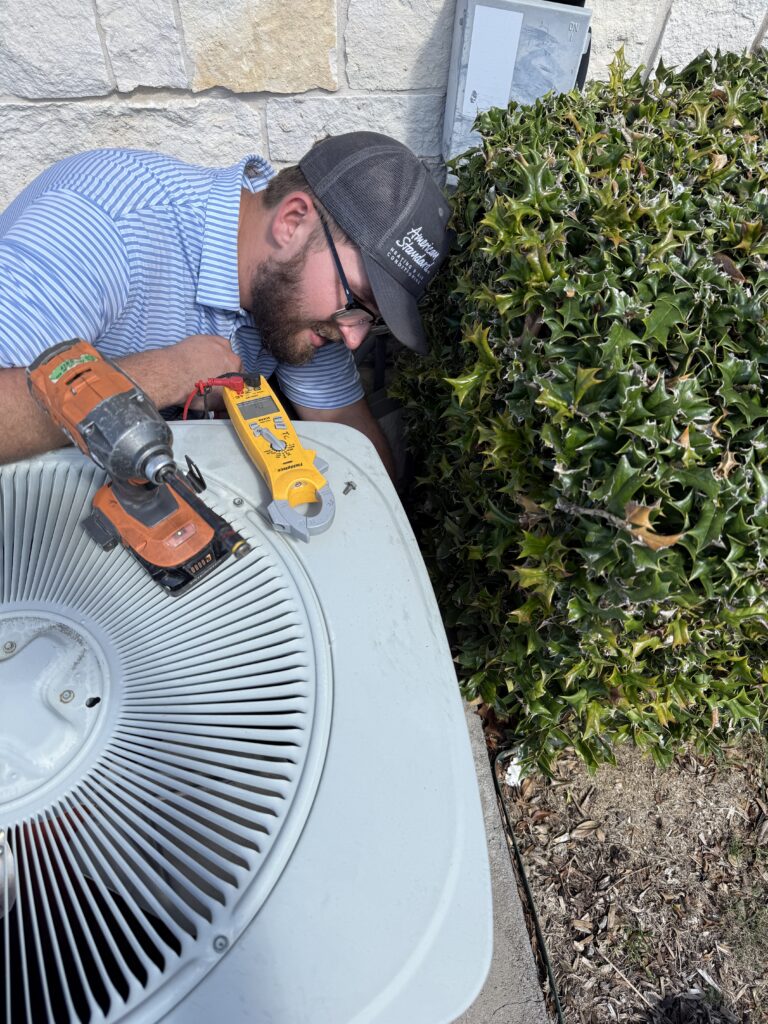
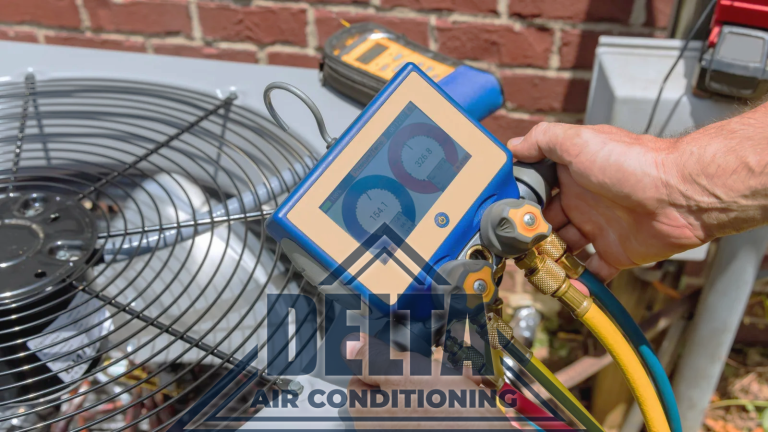
At Delta Air Conditioning, we run what we call a “Stress Test” on your system before the heat arrives. We check refrigerant levels, clean the evaporator and condenser coils, verify your system’s airflow, and make sure your unit is actually removing moisture — not just pushing cold air.
If you’re in Dallas or Beaumont and you’ve noticed any of the signs above — sticky air, musty closets, cabinets that don’t close right — don’t wait until the damage gets expensive. Give us a call and let’s make sure your home is actually protected before summer hits.
Schedule Your Pre-Summer Stress Test