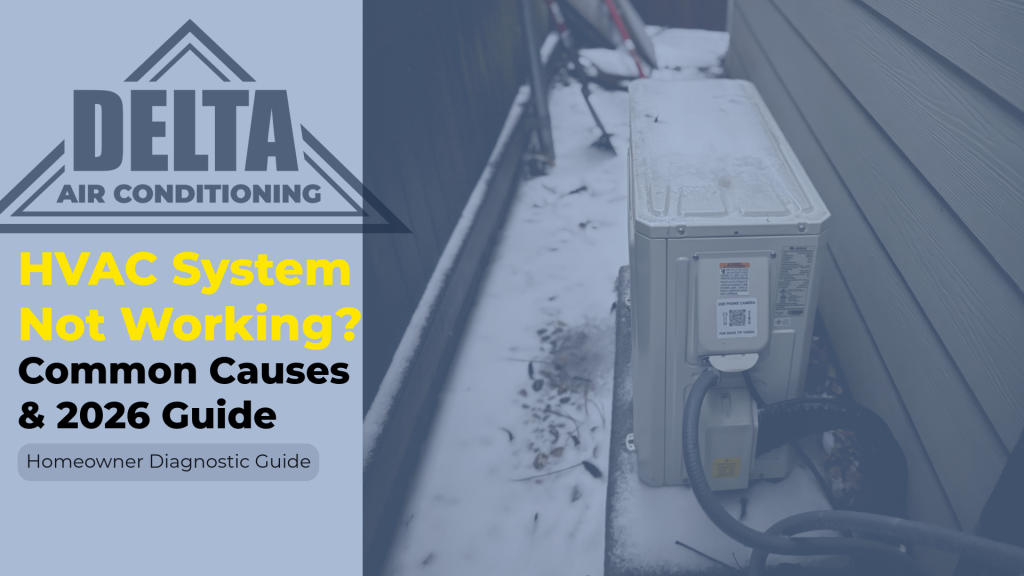
When your AC stops cooling, one of the first places to check is the outdoor unit.
If the inside air handler is blowing air but your AC unit isn’t running — or keeps turning on and off — that’s a sign something isn’t right. And since the outdoor unit contains some of the most important (and expensive) parts of your system, it’s not something you want to ignore.
Let’s walk through the most common reasons this happens, what you can safely check yourself, and when it’s time to call for service.
What the Outdoor Unit Actually Does
Your outdoor AC unit’s job is simple but critical: it releases the heat pulled from inside your home.
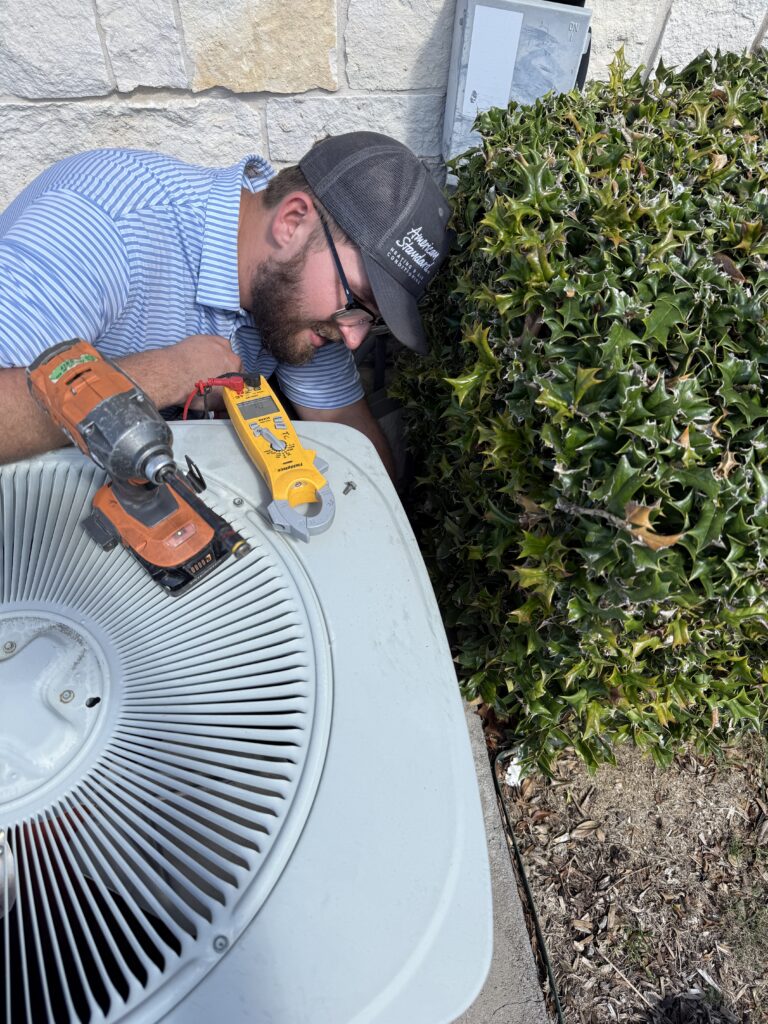
Inside that cabinet are the compressor, condenser coil, fan motor, and key electrical components. If any of those stop working, your system may still move air — but it won’t cool it properly.
That’s why you can feel air coming from your vents… but it’s warm.
1. A Tripped Breaker or Power Issue
Sometimes the issue is surprisingly simple.
Outdoor AC units have their own breaker and a disconnect box nearby. A power surge, storm, or even recent maintenance can leave the unit without power.
Before assuming the worst, check:
- Your main electrical panel for a tripped breaker
- The outdoor disconnect switch to make sure it’s fully engaged
If the breaker keeps tripping, though, that usually points to a deeper electrical problem — and that’s not something to ignore.
2. A Failed Capacitor
Capacitors help start the compressor and fan motor. When one fails, the unit may:
- Make a humming sound but not start
- Start briefly and shut off
- Stay completely silent
Capacitors are one of the most common AC repairs. They also store electrical charge even when the power is off, so this is not a DIY-friendly repair.
3. Contactor Problems
The contactor is basically an electrical switch. When your thermostat calls for cooling, the contactor allows power to reach the outdoor unit.
If it’s worn or stuck, the system may not start — even though everything inside looks normal.
This can cause intermittent cooling or total failure to run.
4. Dirty or Blocked Condenser Coil
Your outdoor unit needs airflow to release heat.
Over time, grass clippings, dirt, leaves, and debris build up on the coil. When airflow is restricted, the system can overheat and shut itself down to prevent damage.
You can help prevent this by:
- Keeping at least 2 feet of clearance around the unit
- Gently rinsing the coil with a garden hose
Avoid pressure washers. They can bend the coil fins and create bigger problems.
5. Fan Motor Issues
If the outdoor fan isn’t spinning, the system can’t release heat properly.
You might notice:
- The unit turns on, but the fan doesn’t spin
- Loud or unusual noises
- The system shuts down shortly after starting
Fan motor problems require professional diagnosis.
6. Compressor Trouble
The compressor is the heart of your AC system — and one of the most expensive parts.
If it fails, your system won’t cool at all.
Compressor issues can be caused by electrical problems, overheating, refrigerant issues, or long-term wear. Because replacement costs can be significant, proper diagnosis is critical before making decisions.
7. Low Refrigerant or Safety Shut-Offs
Low refrigerant — usually caused by a leak — can trigger safety switches that prevent the outdoor unit from running.
In these cases, the system may shut down to protect itself.
Refrigerant issues require professional equipment and certification to diagnose and repair properly.
When to Call for Service
If basic power checks don’t solve the issue, it’s time to bring in a professional.
Running the system while something isn’t working correctly can cause additional damage. What starts as a small repair can turn into a much larger one if ignored.
A proper diagnostic identifies the root cause, explains your options clearly, and helps you avoid unnecessary expenses.
The Bottom Line
If your unit isn’t working, your home won’t heat or cool properly — even if air is still moving inside.
Some problems are minor. Others involve critical components. The key is acting early, not waiting until a small issue turns into a major breakdown.
If something doesn’t feel right, it probably isn’t. If you’re in the Greater Dallas or South East Texas areas, and your unit isn’t running the way it should, reach out today. You can schedule service online or give us a call:
Dallas: (214) 206-8800
Beaumont: (409) 842-5974
Getting a clear diagnosis now can prevent bigger, more expensive issues later.