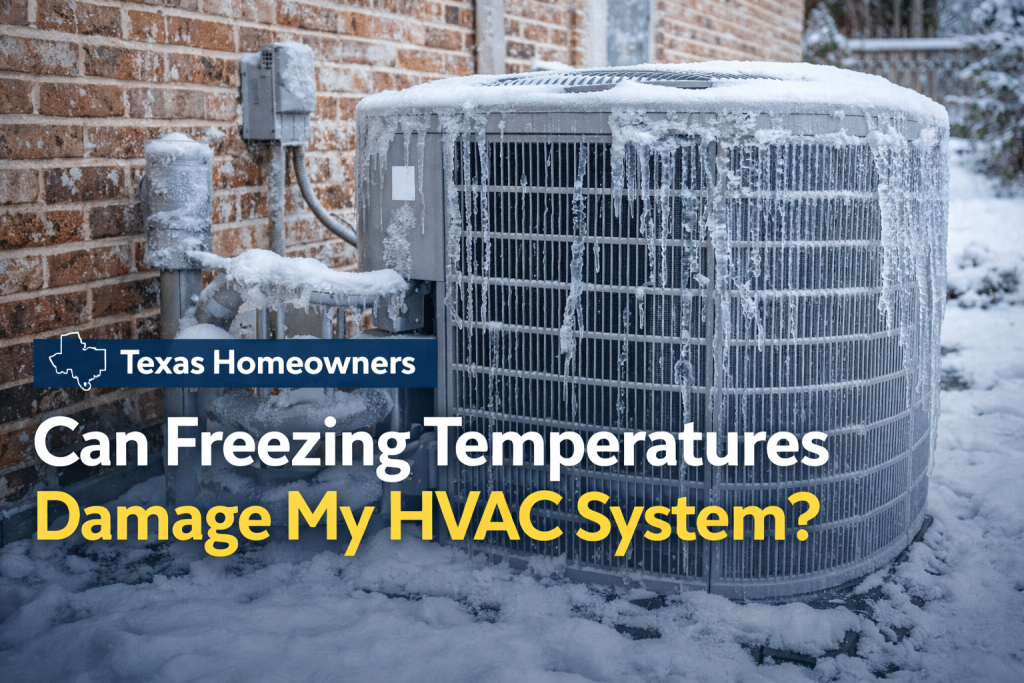
Texas freezes are unpredictable and can place serious strain on HVAC systems that are not designed for prolonged cold weather. This FAQ is designed to answer the most common questions Texas homeowners ask during freezing conditions and provide clear, practical guidance to prevent damage and system failure.
Can freezing temperatures damage my HVAC system?
Yes. Freezing temperatures can damage HVAC systems in Texas, especially outdoor components, condensate drain lines, and exposed piping. Ice buildup and frozen lines can lead to cracked components, reduced efficiency, and complete system failure.
Should I turn my HVAC system off during a freeze?
No. Turning your system off can increase the risk of frozen pipes and internal components. It is best to keep your system running with a consistent thermostat setting to maintain internal warmth and prevent freeze damage.
What temperature should I set my thermostat during a Texas freeze?
Most HVAC professionals recommend keeping your thermostat set between 68°F and 72°F during freezing conditions. Avoid drastic temperature setbacks overnight, as rapid reheating can strain the system.
Is it safe to cover my outdoor HVAC unit during winter?
Yes, if done properly. Cover only the top of the unit using a breathable cover. Do not wrap the entire unit or use plastic that traps moisture, as trapped condensation can freeze and damage internal components.
Can freezing weather damage my AC unit even if I am using heat?
Yes. Even when the heating system is running, outdoor AC or heat pump components remain exposed to freezing temperatures and can suffer ice-related damage if not protected.
How do I protect HVAC pipes and drain lines from freezing?
Use foam pipe insulation on exposed lines, seal air gaps near pipes, and ensure condensate drain lines are clear. In extreme conditions, heat tape may be recommended by a professional.
What are the warning signs my HVAC system is struggling during a freeze?
Common warning signs include weak airflow, cold air from vents, unusual noises, frequent cycling, and sudden increases in energy bills.
Should ceiling fans be used during cold weather?
Yes. Set ceiling fans to rotate clockwise at a low speed to push warm air down from the ceiling and improve heat distribution throughout the home.
What should I do if my HVAC system freezes?
Turn the system off immediately and do not attempt to force it to run. Avoid using open flames or space heaters to thaw components. Contact a licensed HVAC professional for assistance.
Can a winter HVAC inspection prevent breakdowns?
Yes. Preventative inspections identify ignition issues, airflow restrictions, electrical problems, and freeze-prone components before they result in emergency failures.
Is emergency HVAC repair more expensive during a freeze?
Typically, yes. Demand for service increases during freezes, which can result in longer wait times and higher costs. Preventative maintenance before a freeze often reduces this risk.
When should I call a professional HVAC company during winter?
You should call a professional if your system is not producing heat, is making unusual noises, shows signs of ice buildup, or is unable to maintain a consistent indoor temperature.
How Delta Air Pro Helps Homeowners Prepare for Texas Freezes
Delta Air Pro provides professional heating inspections, preventative maintenance, and emergency HVAC repair. Our team understands Texas freeze conditions and helps homeowners protect their systems before problems occur.