Most homeowners understand the importance of changing their HVAC air filter. It’s one of the most common recommendations given for maintaining a healthy heating and cooling system. While air filters play an important role, they are only one piece of the indoor air quality puzzle.
Many indoor air quality issues persist even when filters are changed regularly. Understanding the limitations of standard air filtration helps explain why some homes continue to struggle with allergies, odors, and airborne contaminants.
What HVAC Air Filters Are Designed to Do
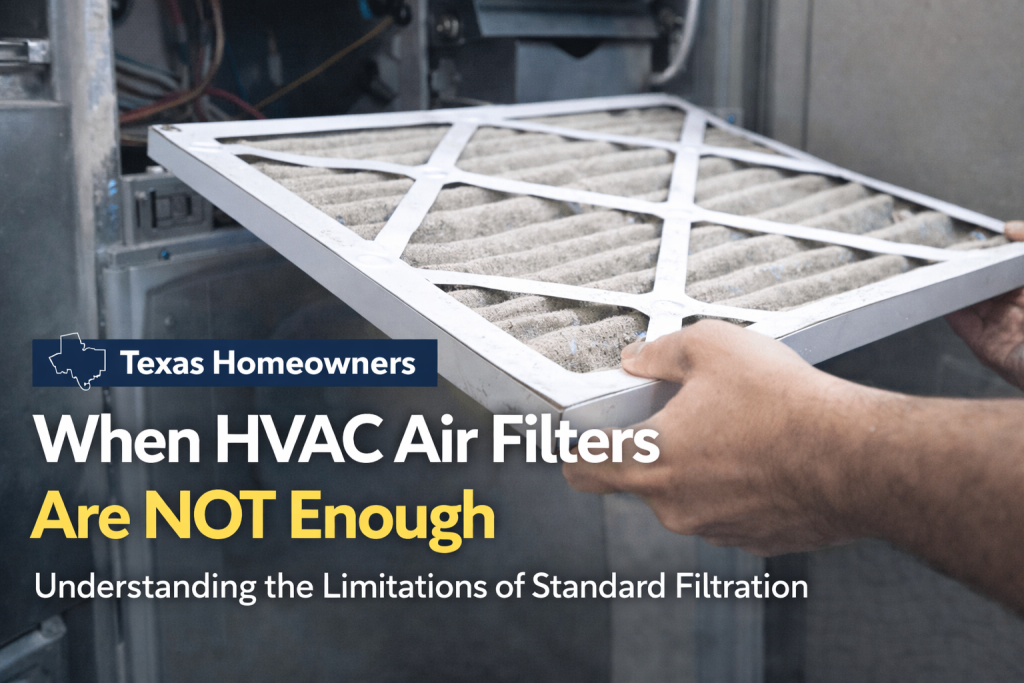
HVAC air filters are primarily designed to protect the equipment itself. Their main job is to capture larger airborne particles before they reach sensitive components like the blower motor and coil.
Filters are effective at trapping visible debris such as dust and lint, but they are not designed to actively clean the air throughout the home.
What Air Filters Do Not Address
Even high-quality filters have limitations. Many common indoor air pollutants are not easily captured through passive filtration alone.
Microscopic Particles and Fine Pollutants
Very small particles can remain suspended in the air without ever passing through the filter. These particles continue to circulate throughout the home as the HVAC system runs.
Odors and Gaseous Contaminants
Cooking smells, pet odors, smoke, and chemical fumes are gases, not particles. Standard air filters are not designed to remove odors or gaseous pollutants from indoor air.
Bacteria, Viruses, and Mold Spores
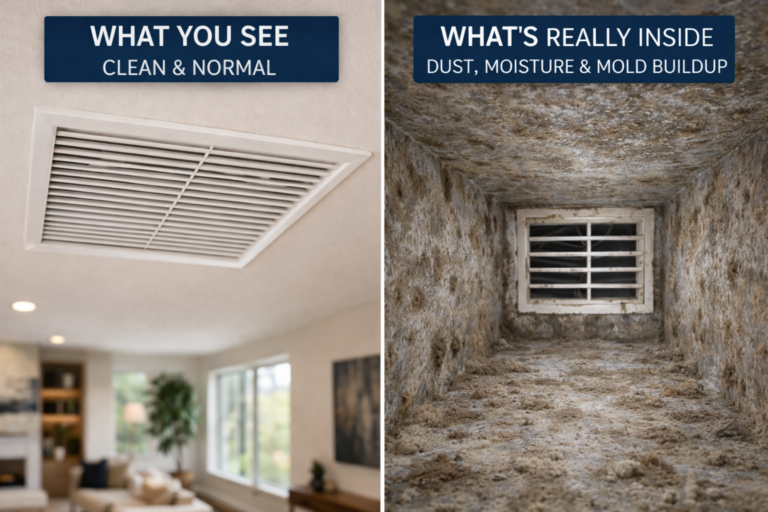
Microorganisms can exist in the air and on HVAC surfaces. While some may be captured by filters, many remain airborne or develop inside ductwork and system components.
Why Indoor Air Quality Issues Persist
When filters are the only air quality measure in place, contaminants that bypass filtration continue circulating. Over time, this can lead to noticeable comfort and health concerns even in homes with well-maintained HVAC systems.
How HVAC Systems Circulate Air
Your HVAC system continuously moves air throughout your home. Any contaminants present are redistributed from room to room each time the system runs.
If the air is not being actively treated, filtration alone cannot address everything moving through the system.
The Difference Between Passive and Active Air Treatment
Air filters are passive by nature. They only work when particles physically pass through them. Active air treatment solutions are designed to reduce airborne contaminants throughout the system as air circulates.
This distinction explains why some homeowners see limited improvement even after upgrading their filters.
When Filters Are Not Enough
Homeowners often consider additional air quality solutions when they notice:
– Ongoing allergy symptoms
– Persistent odors
– Excessive dust despite regular cleaning
– Respiratory irritation
– Musty or stale indoor air
Looking at Whole-Home Air Quality Solutions
Whole-home air quality solutions work alongside the HVAC system to improve air as it moves through the home. These systems are designed to address a broader range of contaminants than filters alone.
In the next article in this series, we’ll explain how whole-home air purification systems work and what makes them different from standard filtration.
How Delta Air Conditioning Helps Improve Indoor Air Quality.
Delta Air Conditioning helps homeowners evaluate indoor air quality concerns and determine whether additional solutions beyond filtration may be beneficial. By assessing your HVAC system and home environment, our team provides guidance tailored to real-world conditions.
If you’re changing filters regularly but still experiencing air quality issues, a professional evaluation can help identify the next step. Contact us today and learn more.