
Allergy season in Dallas doesn’t really feel like a “season” at all—it feels like a revolving door of cedar pollen, spring trees, grass, dust, and mold. Even homeowners who keep a tidy house, change filters sometimes, and try to stay indoors on high‑pollen days still find themselves sniffling, coughing, and rubbing their eyes.
In many cases, the problem isn’t that you’re doing something wrong. It’s that modern Dallas homes are built to hold on to cooled and heated air so well that they also end up holding on to allergens. This article walks through why that happens and what’s actually practical for homeowners to do about it.
Why allergens build up inside Dallas homes
Today’s homes are designed to be tighter and more energy efficient than they were a few decades ago. That’s great for comfort and utility bills, but it also means there’s a lot less natural air exchange with the outdoors. Once air—and whatever’s floating in it—gets inside, it tends to stay there longer.
In Dallas, that indoor air often carries a heavy mix of cedar pollen in late winter, tree and grass pollen in spring, and plenty of dust and pet dander all year. On top of that, humidity and temperature swings can cause particles to settle into carpets, upholstery, and bedding and then get stirred back up every time the HVAC system cycles on. The end result is that allergens don’t just “visit” your home; they collect and recirculate, which is why some people feel worse inside than they do outside.
How HVAC systems can spread allergens instead of removing them
Your HVAC system is meant to move air, and that’s exactly what it does—whether that air is clean or loaded with allergens. Most systems pull air from inside the home, run it through a filter, and then push it back through the ductwork into each room. That process is called recirculation, and it can be helpful or unhelpful depending on how the system is set up.
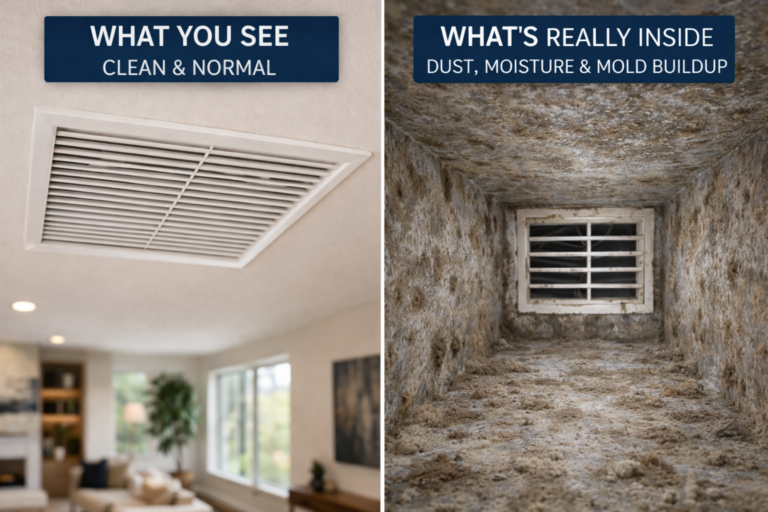
Many basic filters are designed first to protect the equipment, not to capture the smaller particles that bother your sinuses and lungs. When filters are thin, dirty, or not fitted well, dust and pollen can slip past and ride through the ducts over and over. Older or leaky ducts can make this worse by pulling in dust and debris from attics, crawlspaces, or wall cavities and then spreading that mixture into your living spaces. Instead of removing allergens, the system can quietly become the main way they get from one room to another.
The role of humidity in indoor allergens
Dallas doesn’t have the same climate every day of the year; we get stretches of dry air, muggy days, and everything in between. Those humidity swings matter inside your home because many common indoor allergens love moisture. Dust mites and mold, in particular, thrive when humidity is too high and tend to struggle when it’s kept in a healthy range.
When humidity isn’t well controlled, you can get condensation on windows, in wall cavities, or even inside ducts and on cooling coils. That moisture can support mold growth and help dust clump together and stick to surfaces, only to be released again when the system turns on. Cool air coming out of a vent can feel refreshing, but that doesn’t mean it’s clean. Without good filtration and reasonable humidity control, “cool” air can still carry plenty of particles that keep your allergies going.
Signs your home may be trapping allergens
You don’t need special meters or lab tests to suspect that your home is holding on to allergens. Some of the most common signs show up in your day‑to‑day routine:
- Your allergy or sinus symptoms are clearly worse indoors or at night than when you’re outside or away from home.
- You notice musty, stale, or “old” odors, especially when the HVAC system first kicks on.
- There’s visible dust collecting quickly on furniture, around supply vents, or on return grilles.
- Certain rooms always feel stuffy, heavy, or “closed in,” even when the thermostat says the temperature is fine.
- Your HVAC filters look dirty or clogged sooner than you’d expect, or you see dark streaks on or around vents.
Any one of these alone doesn’t prove a problem, but when you recognize several of them together, it’s a strong hint that your home is trapping more than just conditioned air.
What homeowners can do to improve indoor air quality
The good news is you don’t have to turn your life upside down to start making the air inside your Dallas home a little easier to breathe. Small, steady steps add up.
- Change your HVAC filters on a regular schedule, and more often during the worst allergy periods.
- Talk with a trusted professional about choosing filters that balance airflow and better particle capture, rather than grabbing the cheapest or the thickest option on the shelf.
- Keep indoor humidity in a healthy middle range by using your HVAC correctly, running bathroom and kitchen exhaust fans, and addressing any water leaks or condensation quickly.
- Have your ductwork inspected and sealed if needed, especially if your home is older, you’ve done renovations, or you notice dust and uneven temperatures between rooms.
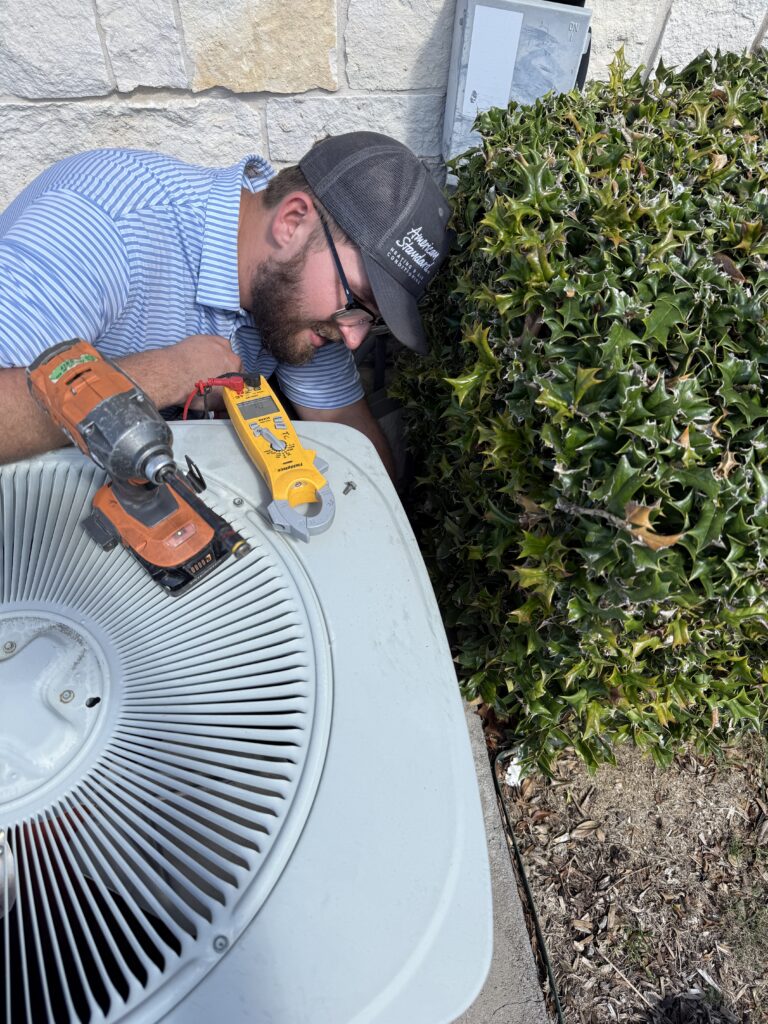
- Schedule routine system inspections so issues like dirty coils, blocked returns, or damaged duct sections get caught before they turn into bigger indoor air problems.
None of these changes are about making your home perfect; they’re about making it more forgiving. In a city like Dallas, where outdoor allergens are a fact of life, the goal is to keep your home from becoming a place where those allergens get trapped and amplified.
Call Delta Air Conditioning Today!
Dallas (214) 206 – 5974
Beaumont (409) 842 – 5974