It’s 3 PM in July. The thermostat reads 79°F. You set it to 72°F hours ago. The AC has been running — you can hear it — and yet you’re still sweating on your own couch.
If this sounds familiar, you’re not alone. It’s one of the most common calls we get every summer in Dallas, and it’s almost never just one thing. A system that runs constantly but can’t keep up is your home telling you something is wrong — and the longer you ignore it, the more it costs you in energy bills, equipment wear, and eventual repairs.
Here’s a breakdown of the most common culprits, and what to do about each one.
1. Dirty Evaporator or Condenser Coils
Your AC system has two sets of coils: one inside your home (the evaporator coil) and one outside (the condenser coil). Both are responsible for transferring heat — which is fundamentally what your AC does. It doesn’t “make cold air.” It removes heat from inside your home and releases it outside.
When either set of coils is coated in dust, dirt, or grime, heat transfer becomes inefficient. The system works harder, runs longer, and still can’t move enough heat to keep up with demand. In Dallas summers, where outdoor temps regularly push past 100°F, dirty coils can be the difference between a comfortable home and a miserable one.
What to do: Coils should be inspected and cleaned annually — ideally before summer starts. This is a professional service; the evaporator coil in particular requires careful handling to avoid damaging the fins.
2. Low Refrigerant (Freon or R-410A)
Refrigerant is the lifeblood of your air conditioning system. It cycles through your coils, absorbing and releasing heat. When refrigerant is low — usually because of a slow leak somewhere in the system — your AC literally loses the capacity to cool.
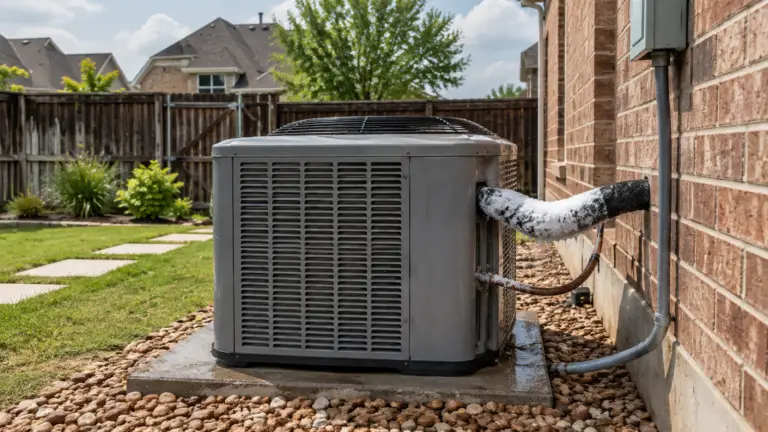
Signs of low refrigerant include warm air blowing from the vents even when the system is running, ice forming on the refrigerant lines or evaporator coil, or a hissing/bubbling sound near the unit.
This one requires a licensed HVAC technician. Refrigerant can’t just be “topped off” — the leak needs to be found, repaired, and then the system properly recharged. In Texas, handling refrigerants requires EPA 608 certification.
What to do: Don’t let this one sit. A refrigerant leak puts strain on the compressor — the most expensive component in the system — and can lead to a full compressor failure if left unaddressed.
3. Clogged Air Filter
This is the simplest fix on the list, and also one of the most common causes of an AC that runs all day without results.
Your air filter’s job is to protect the system from dust and debris. But when it gets too clogged, it restricts airflow to the point where the evaporator coil can’t absorb heat properly. The coil may even freeze over, which essentially shuts down your cooling capacity entirely.
In Dallas, where dust and allergens are heavy in the air for much of the year, filters can clog faster than homeowners expect — especially if you have pets or an older home.
What to do: Check your filter monthly during peak cooling season. Most standard 1-inch filters should be replaced every 30–60 days in summer. Thicker media filters (4–5 inch) can often go 6 months, but still need to be checked.
4. An Undersized or Aging System
Air conditioners are sized to handle a specific cooling load — measured in tons — based on your home’s square footage, insulation, window placement, ceiling height, and other factors. If your system was undersized when it was installed, or if you’ve added square footage since then, it will never be able to keep up on a 105°F Dallas afternoon. It will simply run all day trying.
Aging equipment compounds this problem. An AC that’s 12–15+ years old has lost efficiency even if it’s been well maintained. As components wear, it takes more energy and more run time to produce the same amount of cooling — and at some point, it just can’t get there anymore.
What to do: If your system is 10+ years old and struggling to keep up, it’s worth having a load calculation performed and getting an honest assessment of whether repair or replacement makes more financial sense. In most cases, a new high-efficiency system pays for itself quickly through lower utility bills.
5. Leaky or Uninsulated Ductwork
Your ductwork is the delivery system for all that conditioned air. If ducts are cracked, disconnected at joints, or running through unconditioned spaces like a hot attic, you can lose 20–30% of your cooling capacity before the air ever reaches a vent.
In Dallas, attics regularly exceed 130–140°F in summer. If your ducts are running through that space without proper insulation, the cool air you’re paying to produce is warming back up on its way to your bedroom.
What to do: Duct leakage testing and sealing is a straightforward service that can dramatically improve system performance. If you notice certain rooms in your home are always significantly warmer than others, ductwork is often the cause.
6. Poor Airflow Throughout the Home
Even with clean filters and sealed ducts, poor airflow can prevent your system from cooling effectively. Common causes include closed or blocked vents, furniture blocking return air grilles, and improperly balanced dampers.
Your system is designed as a pressure-balanced loop: air goes out through supply vents and comes back through return vents. When that loop is disrupted — even by something as simple as keeping interior doors closed in a home without proper return air — the system loses efficiency.
What to do: Walk through your home and make sure all supply and return vents are open and unobstructed. If you regularly close off rooms, talk to an HVAC technician about whether your system is properly balanced for that configuration.
7. Thermostat Placement or Settings
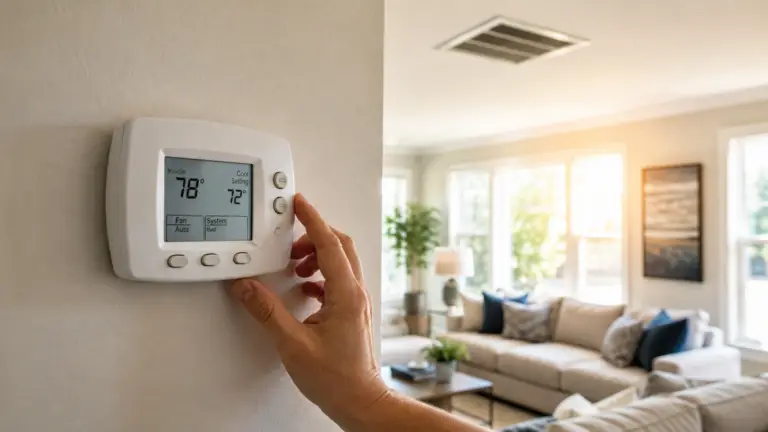
Your thermostat measures the temperature at the location where it’s mounted. If it’s installed near a window that gets direct afternoon sun, next to the kitchen, or near a heat-generating appliance, it’s reading a temperature that doesn’t represent the rest of your home — and it may be telling your system to run far longer than necessary.
Smart thermostat settings can also create problems. If your schedule-based settings are dropping the temperature several degrees right before peak heat hours, your system will run nonstop trying to pull down a hot house during the hottest part of the day.
What to do: Review where your thermostat is mounted and whether it’s in a representative location. For homes with multiple zones or complex layouts, a zoning system may be worth considering.
8. Texas Heat Is in a Category of Its Own
This one isn’t a malfunction — it’s context. Dallas summers are genuinely extreme. The combination of intense sun, sustained 100°F+ temperatures, high humidity in certain conditions, and nights that don’t cool below 80°F means your AC system is operating under conditions that most equipment ratings don’t fully account for.
A system that performs fine in a moderate climate may genuinely struggle here. That’s not a defect — it’s why proper sizing, quality equipment, good insulation, and regular maintenance matter more in DFW than almost anywhere else in the country.
If your home is poorly insulated, has significant air leaks around windows and doors, or has west-facing glass that absorbs heat all afternoon, no AC system will keep up comfortably without addressing those building envelope issues first.
So What Should You Actually Do?
If your AC is running constantly and your home still isn’t comfortable, the honest answer is: don’t try to diagnose this one yourself. The causes above can overlap, and a system that appears to have one problem often has two or three working against it simultaneously.
A qualified technician will check refrigerant levels, measure airflow, inspect coils, evaluate duct integrity, and assess whether your equipment is properly sized for your home. Most of the time, the fix is more straightforward — and less expensive — than homeowners fear.
Is Your AC Running All Day Without Results?
If your AC is running nonstop and your home still feels hot, Delta can inspect the system and identify the real issue before it turns into a bigger repair.
Schedule a Service Call →