AC Frozen Up? Here’s What to Do Before You Call for Service
It is one of the more alarming things a homeowner can see during a Texas summer:
Your air conditioner is running, the house is getting warmer, and there is suddenly ice on the refrigerant line, indoor coil, or HVAC equipment.
An air conditioner freezing up is not normal, and continuing to run the system while it is frozen can make the problem worse.
The good news is that there are a few simple steps you can take immediately to protect the system while you determine what caused the freeze-up.
Here is what homeowners across Dallas, Beaumont, and the surrounding Texas communities should know.
First: Turn the Air Conditioning Off
If you see ice on your HVAC system or suspect the evaporator coil is frozen, the first thing you should do is turn the cooling mode off at the thermostat.
Do not continue running the air conditioner hoping it will eventually cool the house down.
When the evaporator coil is frozen, air cannot move across it properly, which means the system cannot effectively cool your home.
Continuing to operate the system in this condition can place additional stress on HVAC components and may contribute to a more serious repair.
Turn the Fan On, If Possible
After turning the cooling mode off, you can usually switch the thermostat fan setting from AUTO to ON.
This allows room-temperature air to continue moving across the frozen evaporator coil and can help the ice thaw more quickly.
However, if there is little or no airflow coming from your vents, or if you suspect the blower itself is not operating correctly, leave the system off and contact an HVAC professional.
Do Not Try to Break or Scrape the Ice Off
It can be tempting to speed things up by scraping, chipping, or breaking the ice away.
Do not do this.
The evaporator coil and refrigerant lines can be relatively delicate. Using tools or force to remove the ice can damage the coil or refrigerant tubing and turn an airflow or maintenance issue into a much more expensive repair.
Let the system thaw naturally.
Depending on how heavily the coil is frozen, this can take several hours.
Why Does an Air Conditioner Freeze Up?
It may seem strange that an air conditioner can freeze when it is 95 or 100 degrees outside.
But the evaporator coil inside your HVAC system operates at a much colder temperature than the air inside your home.
During normal operation, warm indoor air passes across the evaporator coil. Heat is absorbed from the air, and moisture condenses on the coil before draining away through the condensate system.
If airflow becomes restricted or the refrigeration cycle is not operating correctly, the temperature of the evaporator coil can fall below freezing.
Once that happens, moisture on the coil begins turning into ice.
As the ice builds, airflow becomes even more restricted, which causes the problem to compound.
Eventually, the coil can become completely frozen.
Common Reasons an AC System Freezes
There are several reasons an air-conditioning system may freeze up.
Dirty Air Filter
A clogged air filter is one of the simplest and most common causes of restricted airflow.
When the filter becomes heavily loaded with dust, dirt, and debris, the system may not be able to move enough warm air across the evaporator coil.
Without sufficient airflow, the coil temperature can drop too low and begin freezing.
If your system freezes, checking the air filter is a good first step.
If the filter is visibly dirty, replace it.
However, replacing the filter does not automatically mean the underlying problem has been solved. If the system freezes again, it should be professionally inspected.
Blocked or Closed Supply Vents
Closing too many supply registers throughout the home can also restrict airflow.
Homeowners sometimes close vents in unused rooms thinking it will push more cool air into other areas of the house.
Depending on the HVAC system and duct design, closing too many vents can actually create airflow and pressure problems.
Keep supply registers open unless an HVAC professional has specifically recommended otherwise.
Dirty Evaporator Coil
Dirt and buildup on the evaporator coil can interfere with heat transfer and restrict airflow.
Even with a clean filter, a dirty coil can reduce the system’s ability to operate efficiently and contribute to freeze-ups.
Cleaning an evaporator coil is generally a job for an HVAC technician because the coil is located inside the indoor equipment and may be difficult to access safely.
Blower Motor or Airflow Problems
Your HVAC blower is responsible for moving air through the system and across the evaporator coil.
If the blower motor, capacitor, control board, fan wheel, or another airflow component is not operating correctly, the system may not move enough air across the coil.
You may notice:
- Weak airflow from the vents
- Certain rooms not cooling properly
- The AC running continuously
- Unusual sounds from the indoor unit
- Ice repeatedly forming on the system
These symptoms should be professionally diagnosed.
Low Refrigerant
Low refrigerant can also contribute to an evaporator coil freezing.
An HVAC system does not normally “use up” refrigerant. If refrigerant levels are low, there may be a leak somewhere in the system.
Low refrigerant can cause improper pressures and temperatures within the refrigeration cycle, allowing the evaporator coil to become excessively cold.
If low refrigerant is suspected, the system should be inspected for the underlying cause rather than simply adding refrigerant without identifying the problem.
Dirty or Restricted Ductwork
Collapsed ducts, blocked return vents, improperly sized ductwork, or other duct system problems can also reduce airflow through the HVAC equipment.
In some homes, airflow issues may have existed for years but only become obvious during periods of extreme summer demand.
How Do You Know Your AC Is Frozen?
You may not always be able to see the evaporator coil itself, but there are several warning signs that commonly accompany a frozen system.
Watch for:
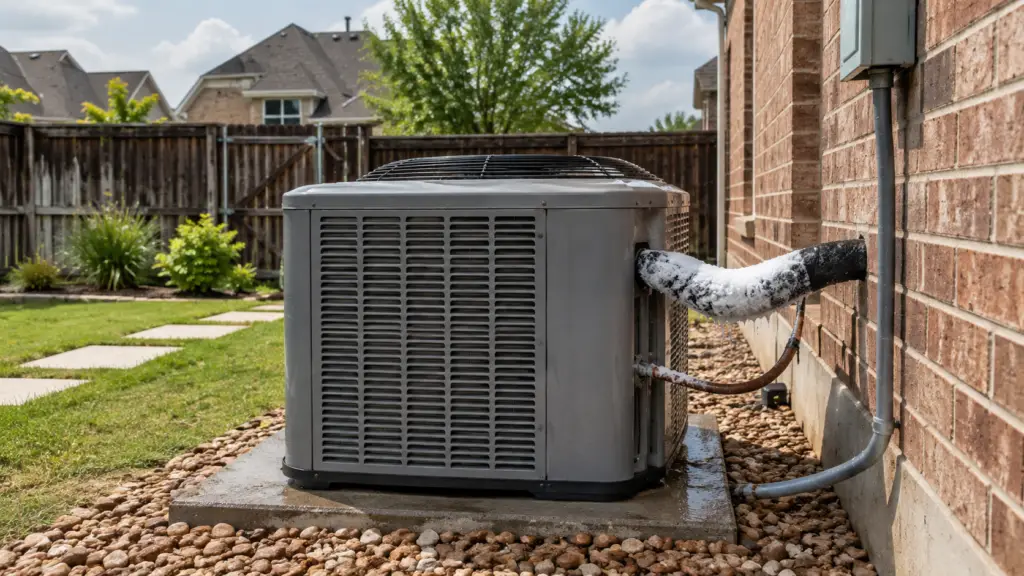
- Ice on the copper refrigerant line
- Ice around the indoor HVAC equipment
- Weak airflow from the vents
- AC running but the house getting warmer
- Little or no cool air coming from supply vents
- Water around the indoor unit after the ice begins melting
- Excessive condensation or drainage
- The system running continuously without reaching the thermostat setting
If you notice a combination of these symptoms, turn the cooling off and inspect the visible HVAC components for ice.
What Happens When the Ice Melts?
A heavily frozen evaporator coil can hold a surprising amount of ice.
When the system is turned off and that ice begins to melt, the resulting water should normally drain through the condensate system.
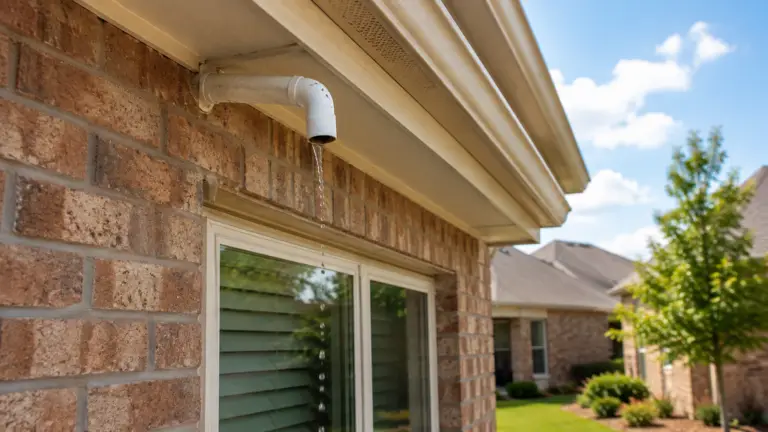
However, depending on the severity of the freeze-up and the condition of the drain pan and condensate line, you may notice water around the indoor unit.
This is particularly important in homes where the HVAC system is located in the attic.
Water around attic-mounted HVAC equipment can potentially damage insulation, drywall, ceilings, and other parts of the home.
If you notice significant water accumulation, ceiling stains, or an overflowing drain pan, contact an HVAC professional.
Can You Turn the AC Back On After It Thaws?
Once all visible ice has completely melted, you can make sure the air filter is clean and verify that supply and return vents are open.
If you identified something obvious, such as an extremely dirty filter, you may be able to restart the system after it has fully thawed.
Then monitor the system carefully.
If the AC begins cooling normally and does not freeze again, the restricted filter may have contributed to the problem.
However, if ice starts forming again, airflow remains weak, or the system still cannot cool properly, turn the system back off.
Repeated freeze-ups indicate that there is likely an underlying issue that needs to be diagnosed.
Do Not Keep Resetting a Frozen AC
One of the biggest mistakes homeowners can make is repeatedly turning a frozen air conditioner back on after only allowing it to thaw temporarily.
The ice itself is a symptom.
Something caused the evaporator coil to become too cold in the first place.
Until that cause is identified, the system may simply freeze again.
Repeatedly operating the equipment in a frozen condition can place unnecessary strain on the HVAC system and delay the repair that actually needs to be made.
When Should You Call an HVAC Professional?
You should schedule service if:
- The system freezes more than once
- Ice returns after replacing the air filter
- Airflow from the vents is weak
- The blower does not appear to be operating
- You suspect low refrigerant
- The system runs continuously but does not cool
- Water is collecting around the indoor unit
- The evaporator coil or refrigerant line repeatedly freezes
- Your AC suddenly performs significantly worse than it did before
An HVAC technician can check airflow, refrigerant pressures, system temperatures, the evaporator coil, blower operation, ductwork, filters, and other components to determine what is causing the freeze-up.
A Frozen AC Is a Symptom — Not the Actual Problem
If your air conditioner freezes, turning the cooling off and allowing the system to thaw is the right first step.
But thawing the ice does not necessarily fix the issue.
Something caused the system to freeze.
It may be something relatively simple, such as a severely clogged filter, or it could involve airflow, refrigerant, the blower system, the evaporator coil, or another HVAC component.
The important thing is to address the cause before the system freezes again.
If your AC has frozen up or is struggling to keep your home comfortable, Delta Air Conditioning can inspect the system, identify what caused the freeze-up, and recommend the appropriate repair.
Delta Air Conditioning serves homeowners throughout Dallas–Fort Worth, Beaumont, the Golden Triangle, and surrounding Texas communities.
AC frozen up? Turn the cooling off, let the system thaw, and contact Delta Air Conditioning if the problem returns or the system is not cooling properly.