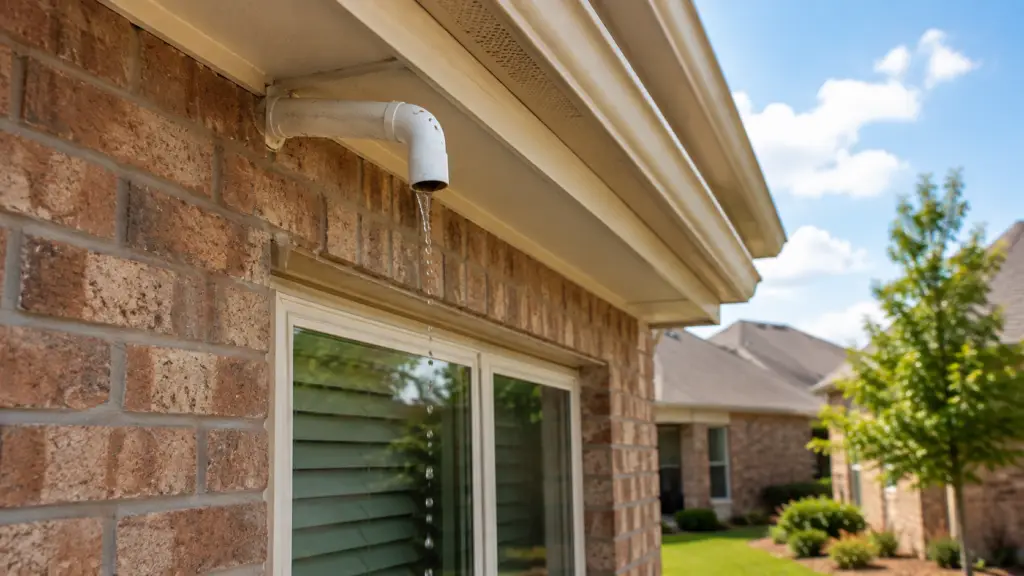
Water Dripping From a Pipe Above Your Window? Your AC May Be Trying to Tell You Something
You walk outside and notice something strange: water is dripping from a small PVC pipe above a window, doorway, or along the roofline of your home.
It may not look like much. Your air conditioner may even seem to be cooling normally.
But that dripping water could be your HVAC system giving you an early warning that something needs attention.
That pipe may be your secondary condensate drain, commonly referred to by HVAC professionals as a “tattletale drain.” It is intentionally placed somewhere noticeable because when water starts coming from it, your system may be telling you that the normal condensate drainage system is not working properly.
For homeowners across Dallas, Beaumont, and the surrounding Texas communities, knowing what that dripping pipe means could help prevent a relatively minor drainage problem from becoming water damage inside your home.
Why Does Your Air Conditioner Produce Water?
Your air conditioner does more than cool the air inside your home. It also removes moisture.
As warm, humid indoor air passes across the cold evaporator coil, moisture from the air condenses into water. That water collects in a drain pan and normally leaves the HVAC system through a condensate drain line.
During a hot, humid Texas summer, an air conditioning system can remove a significant amount of moisture from the air.
Under normal circumstances, homeowners never notice this process because the water quietly drains away.
The problem begins when that water can no longer drain where it is supposed to.
What Is a Tattletale Drain?
Most homeowners have probably never heard the term, but the concept is simple.
Your HVAC system has a primary condensate drain that handles the water created during normal air-conditioning operation.
Many systems also have a secondary drainage method designed to help protect the home if there is a problem with the primary drain. Depending on how the system is installed, this may include a secondary drain line, an auxiliary drain pan, a condensate safety switch, or a combination of these protections.
The secondary drain may terminate somewhere intentionally visible, such as above a window or doorway.
That is why it earned the nickname “tattletale drain.”
If you suddenly see water dripping from a pipe in a conspicuous location where you normally do not see water, the drain is essentially “telling on” the primary drainage system.
If the Tattletale Drain Is Dripping, Don’t Ignore It
Water coming from the secondary drain does not necessarily mean your entire air-conditioning system is failing.
But it does mean something should be investigated.
One of the most common causes is a clogged primary condensate drain line. Dirt, debris, biological buildup, and other material can accumulate inside the line and restrict drainage. When the normal drainage path becomes blocked, water can back up into the system and eventually reach the secondary drainage system.
The secondary drain is helping protect your home, but it is not something you want to rely on indefinitely.
Think of it like a warning light on your dashboard.
The warning system is doing its job. Now you need to determine why the warning appeared.
What Can Cause an AC Condensate Drain to Back Up?
A clogged drain line is one of the most common causes, but several conditions can contribute to condensate drainage problems.
Dirt and Debris Inside the Drain Line
Over time, dirt and debris can accumulate inside the relatively small condensate drain line and restrict water flow.
Once enough buildup develops, the water produced by the AC may no longer be able to drain normally.
Biological Buildup
Condensate lines carry moisture and can develop buildup inside the piping over time. Regular HVAC maintenance can help identify and address drainage issues before they result in an overflow.
Drain Pan Problems
The drain pan beneath the evaporator coil is responsible for collecting condensate before it enters the drain line.
A damaged, deteriorated, improperly draining, or overflowing pan can contribute to water leaking around the HVAC equipment.
A Frozen Evaporator Coil
A frozen evaporator coil can also create excess water when the ice eventually melts. Frozen coils can result from airflow problems and other HVAC issues and should be professionally diagnosed rather than treated as only a drainage problem.
Why This Matters Even More When Your AC Is in the Attic
Many Texas homes have HVAC equipment located in the attic.
That means a condensate drainage failure can occur directly above ceilings, drywall, insulation, and other parts of the home that can be damaged by water.
If the primary drain becomes clogged and the secondary protection also fails or cannot keep up, water can potentially overflow the drain pan and enter the home. Clogged condensate drainage is a recognized cause of HVAC water leakage and potential property damage.
A small amount of water dripping outside may therefore be your opportunity to correct the problem before you discover it as a water stain on the ceiling.
What If Your AC Suddenly Stops Running?
Some HVAC systems have a condensate overflow or float switch designed to shut the system down when water reaches an unsafe level.
If the switch detects rising condensate, it can shut down the air-conditioning system to help prevent an overflow.
That can create another confusing summer service call:
“My thermostat is on, but suddenly my AC won’t run.”
The immediate assumption may be that the compressor, thermostat, or another major component has failed.
Sometimes the system has actually been shut down because a condensate safety device detected a drainage problem.
That is another reason an AC system that suddenly stops operating should be properly diagnosed rather than repeatedly reset.
Can You Just Ignore the Dripping Water?
You shouldn’t.
If your secondary condensate drain is actively dripping, the important question isn’t how to stop the visible drip.
The important question is:
Why is water reaching the secondary drain in the first place?
The secondary drain is the backup.
You want to make sure the primary condensate system is draining properly and that there isn’t another condition causing excess water around the indoor HVAC equipment.
Should You Try to Clear the Drain Yourself?
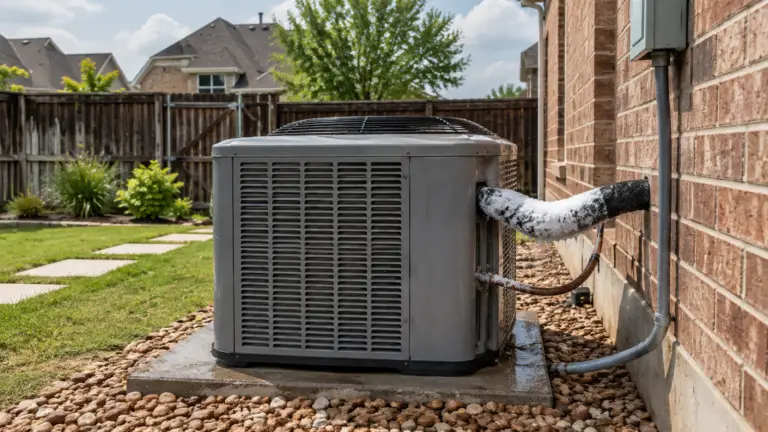
There are homeowner maintenance methods for clearing some condensate drain clogs, including using a wet/dry vacuum at the drain termination. HVAC manufacturers also recommend turning the system off before attempting condensate drain maintenance.
However, what appears to be a simple clogged drain can sometimes involve the drain pan, evaporator coil, improper drainage, airflow problems, or another HVAC condition.
If water is already reaching the secondary drain, accumulating around the equipment, staining the ceiling, or repeatedly causing the system to shut down, having the system inspected is the safer approach.
Watch for These Warning Signs
Contact an HVAC professional if you notice:
- Water dripping from a secondary drain above a window, doorway, or roofline
- Standing water in or around the HVAC drain pan
- Water stains appearing on a ceiling or wall
- Water around the indoor air-conditioning equipment
- Your AC suddenly shutting off even though the thermostat is calling for cooling
- A condensate drain that repeatedly becomes clogged
- Ice forming on the evaporator coil or refrigerant lines
- Unusual moisture or musty odors around the HVAC system
The earlier a drainage problem is addressed, the better the chance of correcting it before it causes additional problems.
That Little Dripping Pipe Is There for a Reason
It is easy to walk past a small dripping pipe and assume it is normal condensation from the air conditioner.
But where the water is coming from matters.
Normal condensate should leave through the HVAC system’s primary drainage path. If water has reached a visible secondary or “tattletale” drain, your system may be warning you that the primary drainage system needs attention.
That warning is worth paying attention to.
If you’ve noticed water dripping from your AC’s secondary drain, water around your indoor HVAC equipment, or unexplained moisture near your ceiling, Delta Air Conditioning can inspect the condensate drainage system and determine what’s causing the problem.
Delta Air Conditioning serves homeowners throughout Dallas–Fort Worth, Beaumont, the Golden Triangle, and surrounding Texas communities.
See water coming from your AC’s tattletale drain? Contact Delta Air Conditioning to schedule an HVAC inspection before a drainage problem turns into water damage.