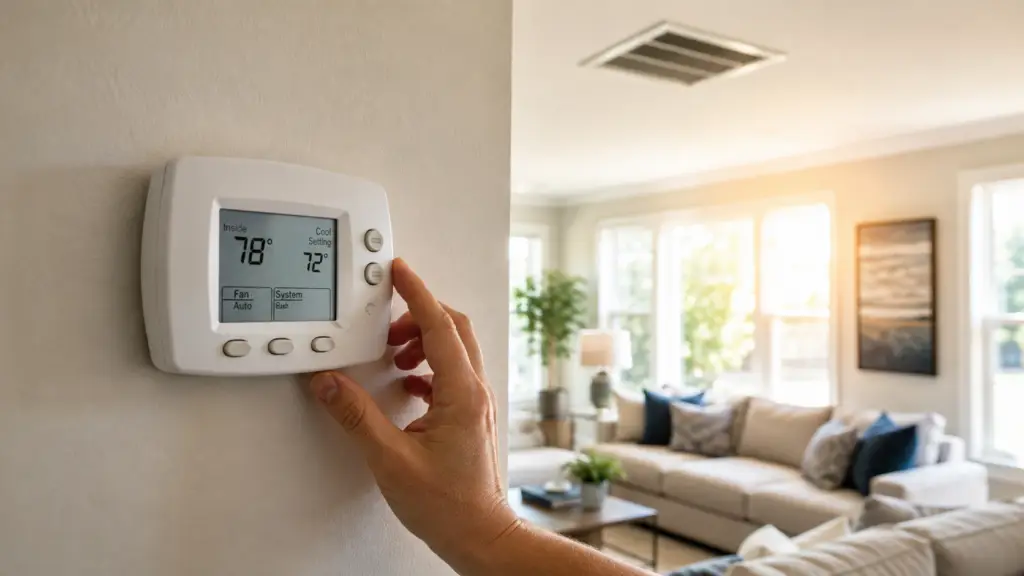
Thermostat Set to 75°, But Your House Is Still 79°? Here’s What May Be Happening
When summer temperatures climb across Dallas, Beaumont, and the surrounding areas, one of the most common questions homeowners ask is:
“My thermostat is set to 75 degrees, so why is my house still 79 or 80?”
If your air conditioner is running but the indoor temperature is staying several degrees above your thermostat setting, it does not automatically mean your AC is broken. During periods of extreme heat and humidity, your cooling system may simply be working against a heavier load than it normally experiences.
However, there are also situations where struggling to reach the thermostat setting can indicate an HVAC problem that should be inspected.
Here is what homeowners should know.
Your Thermostat Setting Is a Target — Not a Cooling Speed
One of the biggest misconceptions about air conditioning is that lowering the thermostat makes the AC produce colder air or cool the house faster.
It does not.
If your home is 80 degrees and you lower the thermostat from 75 to 70, the air conditioner does not suddenly work harder or produce colder air. The thermostat simply tells the system to continue running until the desired temperature is reached.
Your air conditioner has a limited amount of cooling capacity. During extreme summer conditions, the amount of heat entering your home can sometimes approach — or even exceed — the amount of heat your AC system can remove.
That is when you may see your thermostat set at 75 while the indoor temperature remains at 78, 79, or even 80 degrees during the hottest part of the afternoon.
Extreme Outdoor Temperatures Increase the Cooling Load
Texas summers can place enormous demand on residential air conditioning systems.
As outdoor temperatures rise, heat continuously enters your home through:
- The roof and attic
- Exterior walls
- Windows and doors
- Air leaks around the home
- Ductwork
- Sun exposure
- People, appliances, and electronics inside the home
During a typical summer day, your AC may have no problem maintaining the temperature you selected.
But during prolonged periods of extreme heat, your cooling system may need to run almost continuously just to keep up with the heat entering the home.
That does not necessarily mean something is wrong.
Humidity Makes the AC Work Even Harder
Humidity is another major factor, especially in areas such as Beaumont and Southeast Texas.
Your air conditioner has two jobs:
- Lower the temperature of the air.
- Remove moisture from the air.
When humidity levels are extremely high, part of your AC system’s capacity is being used to remove moisture rather than simply lowering the indoor temperature.
This additional workload can make it more difficult for the system to quickly reach the thermostat setting.
It is also why a properly cooled and dehumidified 78-degree home can often feel much more comfortable than a humid home at the same temperature.
Is It Normal for the AC to Run for Long Periods?
During extremely hot weather, yes.
Longer cooling cycles are not automatically a sign that something is wrong.
In fact, during peak summer afternoons, a properly operating and properly sized air conditioner may run for extended periods as it works to maintain comfortable indoor conditions.
The bigger question is whether the system is actually making progress.
For example, if the thermostat is set to 75 and your home reaches 79 during the hottest part of the afternoon but begins recovering as outdoor temperatures fall later in the day, the system may simply be experiencing a very high cooling load.
If the temperature continues rising, never recovers, or the system suddenly performs much worse than it did previously, there may be another issue.
Why Your AC May Not Be Reaching the Thermostat Setting
Extreme heat is only one possibility. Several HVAC or home-performance issues can reduce your system’s ability to cool effectively.
Dirty Air Filter
A clogged air filter restricts airflow through the HVAC system.
Reduced airflow can decrease cooling performance, increase system run time, and place unnecessary strain on your equipment.
During heavy summer use, filters may also need to be checked more frequently than they would during milder months.
Dirty Outdoor Condenser
Your outdoor AC unit needs to release heat from your home into the outside air.
When the condenser coil becomes covered with dirt, debris, grass clippings, or other buildup, the system may have difficulty releasing that heat efficiently.
The result can be longer run times and reduced cooling capacity.
Low Refrigerant
Your AC system relies on refrigerant to transfer heat out of your home.
If refrigerant levels are low — often because of a leak — the system may run continuously without providing the cooling performance it normally would.
Low refrigerant is not something that should simply be “topped off” repeatedly. If refrigerant is low, the underlying cause should be diagnosed.
Restricted Airflow
Problems with the blower, evaporator coil, ductwork, vents, or other components can restrict the amount of conditioned air moving through the home.
You may notice certain rooms staying warmer than others or weak airflow coming from the vents.
Leaking Ductwork
If conditioned air is escaping through damaged or disconnected ductwork, a portion of the cooling you are paying for may never reach your living space.
Duct leakage can be particularly problematic when ductwork runs through a hot attic.
Insulation and Air Leakage
Sometimes the air conditioner is functioning correctly, but the home itself is gaining heat faster than expected.
Poor attic insulation, air leaks, older windows, inadequate weather sealing, and heavy sun exposure can all increase the cooling load.
Aging or Undersized Equipment
Older HVAC systems can gradually lose performance as components wear.
In other cases, the AC system may simply be undersized for the home’s cooling requirements.
Equipment sizing is especially important during extreme weather because that is when the system is being asked to operate near its maximum capacity.
A Common Misconception About the “20-Degree Rule”
You may have heard that an air conditioner can only cool a home about 20 degrees below the outdoor temperature.
That is not exactly how residential air conditioning works.
HVAC professionals often look at the temperature difference between the air entering the system and the conditioned air leaving the system. A typical temperature difference may be roughly 15 to 20 degrees under normal operating conditions.
That does not mean that if it is 100 degrees outside, your home can never cool below 80 degrees.
A properly designed HVAC system may be able to maintain temperatures much lower than that depending on the equipment, home construction, insulation, humidity, system condition, and overall cooling load.
When Should You Call an HVAC Professional?
If your thermostat is set lower than the current indoor temperature, your AC is running, and the system simply falls a few degrees behind during the hottest part of an extreme summer afternoon, it may be worth monitoring.
However, you should consider having the system inspected if:
- The temperature inside continues climbing while the AC runs
- The home never cools back down after outdoor temperatures decrease
- The system is blowing warm or barely cool air
- Airflow from the vents feels unusually weak
- The AC is constantly turning on and off
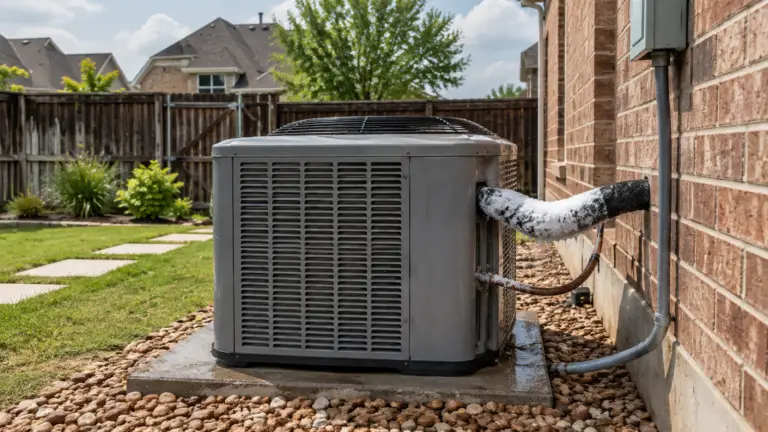
- Ice is forming on the indoor or outdoor equipment
- Certain rooms are dramatically warmer than others
- The system suddenly cannot maintain temperatures it previously handled
- Your energy bills have increased significantly without an obvious reason
A professional HVAC technician can determine whether the system is simply dealing with extreme conditions or whether a mechanical, airflow, refrigerant, ductwork, or equipment issue is reducing its cooling capacity.
Your AC Is Working Hard During a Texas Summer. Make Sure It Is Working Correctly.
When temperatures and humidity climb across Dallas, Beaumont, and Southeast Texas, your HVAC system may run longer than usual and occasionally struggle to maintain the exact thermostat setting during peak afternoon conditions.
The important thing is knowing the difference between a system working hard and a system that is no longer working properly.
If your air conditioner is struggling to keep your home comfortable, Delta Air Conditioning can inspect your system, identify what is limiting its performance, and help determine the right solution.
Whether the issue is airflow, refrigerant, equipment performance, ductwork, maintenance, or simply extreme summer conditions, getting the system evaluated can give you a clear answer instead of guessing.
Need help with an AC that won’t reach the thermostat setting? Contact Delta Air Conditioning to schedule HVAC service in Dallas, Beaumont, or the surrounding service area.